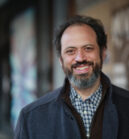
Guest appearances
Valerie FridlandEvery podcast appearance, updated as new ones drop
Podcast guest — appeared on The Endless Knot, Think Fast Talk Smart: Communication Techniques and 17 other shows.
- Episodes
- 23
- Shows
- 19
- Hours
- ~20
Tracked from 3 Oct 2022 to 15 Jul 2026
Recent guest appearances
Show 23 episodes — hide
- Are you pronouncing 'caramel' wrong? | ACCENTS (ft. Valerie Fridland)
Why do Americans and Brits have the accents they have? Sociolinguist, professor and author Valerie Fridland joins Rob and Jess this week to discuss why we talk funny. 🍮 Does 'caramel' have one or two syllables? 🪶 Do Americans sound more like Shakespeare than Brits? 🎩 Why do some accents sound 'posher' than others? These questions answered, an many more, in another gloriously nerdy episode of Words Unravelled. 📘 VALERIE'S BOOKS 📕 Why We Talk Funny: https://www.penguinrandomhouse.com/books/744046/why-we-talk-funny-by-valerie-fridland/ Like, Literally, Dude: https://www.penguinrandomhouse.com/books/671558/like-literally-dude-by-valerie-fridland/ 👕 OUR MERCH 👚 US SHOP: https://wordsunravelledshop.myspreadshop.com/ EU/UK SHOP: https://wordsunravelledshop.myspreadshop.net/ 🎥 WATCH THIS EPISODE: https://youtu.be/t71jZBSfack
- Why We Talk Funny: a Conversation with Valerie Fridland on the Origins of Accents and Attitudes About Them
What did you think of this episode? Author Valerie Fridland is the author of the new book Why We Talk Funny : the Real Story Behind Our Accents (Viking, 2026.) In this fascinating episode that launches Season 4, we'll talk about the Revolutionary-era origins of our American accents, how mainstream American English arose as the 'prestige' dialect, the shibboleth (which explains the hostility people feel about 'latch' versus 'lay' in Appalachia, and Virginia's complex linguistic landscape. A professor of linguistics at the University of Nevada (that's ne-va-da as in "cat"), Fridland is also the author of Like, Literally Dude: Arguing for the Good in Bad English. She's also originally from the South, so she gets it when we talk about how important accents can be to speakers. A bonus episode on the histories of Y'all, You's, and Yinz is available to paid subscribers here, on Facebook, and on Patreon. Support the show *Subscribe wherever you get your podcasts and review the podcast (if you like it)! *Support the show by sharing links to episodes on social *Subscribe to support the podcast on the Facebook Talking Appalachian page, or here at our Patreon page to get bonus content: Talking Appalachian Podcast | Covering the Appalachian Region from North to South | Patreon *Follow and message me on IG, FB, YouTube: @talkingappalachian *To sponsor an episode or collaborate: talkingappalachianpodcast@gmail.com or message me at the link here or on social. Unless another artist is featured, acoustic music on most episodes: "Freight Train" written by Elizabeth Cotten and performed by Landon Spain
- Accents, with Valerie Fridland
What does your accent say about you? (And yes, you DO have an accent!) Why do accents develop, and what is the history behind the wide range of modern American accents? We talked to Valerie Fridland about all of these questions and more, covered in her delightful new book “Why We Talk Funny”. Valerie’s book “Why We Talk Funny” Like, Literally, Dude! and our interview with her about it Dr. Valerie Fridland’s website Transcript of this episode This episode on YouTube Our Patreon page Redbubble store This podcast is licensed under a Creative Commons Attribution-ShareAlike 4.0 International License The Endless Knot RSS
- Why Gen Z Language Isn’t “Bad English” with Valerie Fridland
If you’ve ever felt insecure about your voice, your accent, or the way you communicate, this episode is for you. Have you ever wondered why the new generations always text differently? Or why accents exist, or why people judge the way others talk, and how social media is transforming language in real time? In today’s episode of The SMARTA Podcast , I sit down with Valerie Fridland , professor of sociolinguistics and bestselling author of Why We Talk Funny , for one of the most fascinating conversations we’ve had about language, identity, accents, communication, and human connection. We also talk about Gen Z slang, the psychology of accents, identity, belonging, confidence, and the hidden science behind every conversation you have. Communication is far less about perfection… and far more about connection. What You’ll Learn: • Why every single person has an accent • The psychology behind why people judge speech patterns • How social media is changing language globally • Why communication is about connection, not perfection • How accents shape identity and belonging • Why Gen Z language is evolution — not “bad English” • The surprising science behind the way humans communicate Valerie Fridland is a professor of sociolinguistics, researcher, speaker, and author of books including Like, Literally, Dude and Why We Talk Funny . Her work explores the relationship between language, identity, social behaviour, and communication — helping people better understand not just how we speak, but why we speak the way we do. You can find Valerie through her books, speaking engagements, and academic work in linguistics and communication. In this episode: 00:00 – Welcome 02:30 – Why We Judge The Way People Speak 05:18 – What are accents? 08:02 – Why Humans Notice Accents 12:00 – Why Older Generations Criticise New Language 15:50 – What Sociolinguistics Really Means 20:04 – The Myth of “Bad English” 26:46 – How Social Media Is Changing Language 30:00 – Are Regional Accents Disappearing? 31:34 – Should You Adapt Your Accent to Fit In? 35:00 – Language, Identity & Perception 39:48 – Why We’re Too Hard on Ourselves 41:00 – Phones vs Real Human Connection 43:00 – Valerie’s Definition of Success 48:39 – Why Failure Shapes You More Than Success 51:28 – Final Advice: Stop Sweating the Small Stuff If this episode made you think differently about communication, identity, or connection — share it with someone who needs to hear it. Subscribe to The SMARTA Podcast for conversations with world-class thinkers, authors, and experts. And next time you speak to someone: Look them in the eye. Ask a question. And remember, connection matters more than sounding perfect.
- 284. Hear Me Out: How Understanding Accents—Ours & Others—Improves Communication
Understanding the accent you didn’t know you had. Whether communicating in our mother tongue or practicing a new language, we all speak with an accent. But that’s not all, says Valerie Fridland — we hear with an accent as well. Fridland is a professor of sociolinguistics at the University of Nevada, Reno, and author of Why We Talk Funny: The Real Story Behind Our Accents . According to her, we don’t just sound a certain way, we hear a certain way too, affecting how we understand others. “We’re hearing with an accent — a bias shaped by our own language and experience,” she says. But instead of expecting others’ communication to fit our preconceptions, Fridland says to meet people halfway. “If we want to make communication successful, it’s not just their job as a speaker, it’s my job as a listener.” In this episode of Think Fast, Talk Smart , Fridland and host Matt Abrahams discuss how empathetic listening opens the door to understanding. Whether you’re communicating in a context of mutual intelligibility or attempting to bridge cultural and linguistic divides, Fridland’s insights show how connection is a collaboration — shaped by accents on both sides of the conversation. To listen to the extended Deep Thinks version of this episode, please visit FasterSmarter.io/premium . Episode Reference Links: Valerie Fridland Valerie’s Book: Why We Talk Funny Ep.91 Um, Like, So: How Filler Words Can Create More Connected, Effective Communication Connect: Premium Signup >>>> Think Fast Talk Smart Premium Email Questions & Feedback >>> hello@fastersmarter.io Episode Transcripts >>> Think Fast Talk Smart Website Newsletter Signup + English Language Learning >>> FasterSmarter.io Think Fast Talk Smart >>> LinkedIn , Instagram , YouTube Matt Abrahams >>> Lin
- 191. Why We Talk Funny: The Real Story Behind Our Accents with Valerie Fridland
Get ready to think more than ever about the way you talk and the way people talk to you as Emily and Kyle sit down this week with sociolinguist Valerie Fridland to discuss her latest book Why We Talk Funny: The Real Story Behind Our Accents . From baby talk to regional accents, the trio explores how our speech patterns develop as a combined effort of the brain and the world of speakers around us. History and culture shape the way people speak, and the way people speak shapes our judgments of them. What does it mean to drop the ‘r’ at the end of a word? Posh British? Good ole Southern United States? Or perhaps native New Yorker? Dialects, accents, and the subtle ways they evolve weigh heavily on how we interact with one another. Fridland makes a case study of this with African American English, revealing a deep history that challenges the idea of “incorrect” speech. As the conversation unfolds, Fridland highlights our perception, bias, and the shared responsibility between speakers and listeners to approach every conversation with consideration and compassion. Like what you hear? Follow Butter No Parsnips elsewhere: • Instagram • Facebook • TikTok • Twitch • Support the show: • Patreon • Website • Ko-fi • Produced by Seth Gliksman , Kyle Imperatore, and Emily Moyers Main theme and accompanying themes by Kyle Imperatore
- 'Why We Talk Funny.' The reasons behind our accents, with Valerie Fridland
1179. This week, we talk to Valerie Fridland, a linguist and professor who grew up in Memphis surrounded by Southern accents and now researches the history and social power of speech. We look at her new book, "Why We Talk Funny: The Real Story Behind Our Accents," which explores the history of how American speech developed and how colonial settlement patterns shaped regional identities. Then we look at the decline of regional accents, the mechanics of speech sounds like "L" and "R," and the psychological impact of accent bias. Get Valerie’s new book, " Why We Talk Funny: The Real Story Behind Our Accents." More from Valerie at valeriefridland.com 🔗 Join the Grammar Girl Patreon. 🔗 Share your familect recording in Speakpipe or by leaving a voicemail at 833-214-GIRL (833-214-4475) 🔗 Watch my LinkedIn Learning writing courses . 🔗 Subscribe to the newsletter . 🔗 Take our advertising survey . 🔗 Get the edited transcript here . 🔗 Get Grammar Girl books . | HOST: Mignon Fogarty | Grammar Girl is part of the Quick and Dirty Tips podcast network . Audio Engineer: Dan Feierabend Director of Podcast: Holly Hutchings Advertising Operations Specialist: Morgan Christianson Marketing and Video: Nat Hoopes, Rebekah Sebastian Podcast Associate: Maram Elnagheeb | Theme music by Catherine Rannus . | Grammar Girl Social Media: YouTube . TikTok . Facebook . Threads . Instagram . LinkedIn . Mastodon . Bluesky . <p style='color:grey; fo
- The Science and History of English Accents: Interview with Valerie Fridland
In this episode, Ray talks with linguist Valerie Friedland about accents—what they are, where they come from, and why everyone has one. They explore how accents begin in early childhood, how regional speech patterns change over time, and why certain pronunciations carry such strong social meaning. From accent bias to the myth of "accentless" speech, the conversation reveals how deeply language shapes identity and perception. Use this link to buy Valerie's new book, Why We Talk Funny: https://www.valeriefridland.com/
- 133: Why We Talk Funny (with Valerie Fridland)
We all have an accent — or several! And we use them to communicate things about us, and highlight aspects of our identity. So what's going on with the accents we hear? Are we losing some accents, or are they just changing? Dr Valerie Fridland is the author of Why We Talk Funny, and she joins us for this episode. Timestamps Start: 0:00 Intros: 0:30 News: 6:25 Related or Not: 17:59 Interview with Valerie Fridland: 36:53 Words of the Week: 1:50:34 The Reads: 2:21:21 Outtakes: 2:26:14
- PPP 434 | The Surprising Benefits of Bad English in Leadership, with Valerie Fridland
Summary In this episode, Andy welcomes sociolinguist Valerie Fridland to discuss her new book Like, Literally, Dude: Arguing for the Good in Bad English . They explore the significance of language use in leadership, including the use of filler words, intensifiers, and vocal fry. She challenges the notion that filler words should be eliminated, highlighting their cognitive and communicative benefits. Overall, the conversation provides insights into the complexities of language and its role in effective communication. It's a fun discussion about language that will have you laughing, for sure, but also leaving the conversation with insights to help you lead more effectively at work (and at home). Sound Bites "Probably the best answer is I know enough about other languages to order a beer in those languages and that's pretty much probably all you need." "But it's also on the other side that when we're letting ourselves get distracted by those speech features (filler words), and then we're dismissing what they have to say because of something we don't like, we're also doing something wrong." "I said I study vowel movements. He heard bowel movements and thought I was a gastroenterologist." "If parents are worried about the way their kids talk, just show really good interest in trying to copy it and they'll never say it in front of you again." Chapters 00:00 Introduction 02:21 Start Of Interview 03:34 Language And Social Identity 06:56 The Evolution Of Language And Social Identity 13:41 The Role Of Filler Words 22:53 The History And Use Of 'Like' 34:11 Pressures On Women In The Workplace 34:58 Vocal Fry In Media And Public Perception 35:23 Gender And Vocal Fry Criticism 38:38 Understanding And Adapting Speech Features 39:52 Effective Communication Strategies 41:32 Judging Speech In Professional Contexts 47:48 Advice For Parents On Communication 50:18 Wrap-Up 50:39 Andy Comments After The Interview 52:51 Outtakes Learn More You can learn more about Valerie and her book at ValerieFridland.com . Prepare to Pass Your Project Management Certification Exam We regularly help people just like you prepare and pass their PMP and CAPM certification exams. If you or someone you know is thinking about pursuing project management certification, contact us! We'd love to help you earn your credential. Learn more and enroll at i-leadonline.com/PMSeries . Thank you for joining me for this episode of The People and Projects Podcast! Talent Triangle: Power Skills Topics: project management, leadership, language, social identity, filler words, communication, vocal fry, gendered speech, linguistic diversity, parenting The following music was used for this episode: Music: Fantastical Ferret by Tim Kulig License (CC BY 4.0): https://filmmusic.io/standard-license Music: Tuesday by Sascha Ende License (CC BY 4.0): https://filmmusic.io/standard-license
- Revisiting 'Like, Literally Dude' with Valerie Fridland on Access Utah
On this episode we talk speech. We revisit our conversation with Valerie Fridland, professor of linguistics in the English Department at the University of Nevada, Reno and author of Like, Literally, Dude: Arguing for the Good in Bad English.
- Why Language is Always Changing with Valerie Fridland
Language changes, and that's not a bad thing! This week, Adam is joined by sociolinguist Valerie Fridland to uncover how language is much more malleable than we're led to believe, and how the resistance against new slang often disguises an attempt to limit the influence of marginalized communities. Pick up Valerie's book at factuallypod.com/books Like the show? Rate Factually! 5-Stars on Apple Podcasts and let Adam know what conversation you'd like to hear next. Advertise on Factually! via Gumball.fm SUPPORT THE SHOW ON PATREON: https://www.patreon.com/adamconover SEE ADAM ON TOUR: https://www.adamconover.net/tourdates/ See Privacy Policy at https://art19.com/privacy and California Privacy Notice at https://art19.com/privacy#do-not-sell-my-info. See Privacy Policy at https://art19.com/privacy and California Privacy Notice at https://art19.com/privacy#do-not-sell-my-info .
- 91. Um, Like, So: How Filler Words Can Create More Connected, Effective Communication
We’re often advised not to use “um” or “uh”, or “so” and “you know” in our communication. But linguist Valerie Fridland might argue otherwise. “Language is about how we encode both the linguistic message and a social message,” she says. “Crutch words … are really valuable and they have arisen to serve a need.” In this episode of Think Fast, Talk Smart , Fridland sits down with host and strategic communications lecturer Matt Abrahams to discuss how and when we use "you know","so", and other filler words. For example, Fridland says, the way we use “um” varies greatly from how and we might use “uh.” And the use of “like,” while deplored by many, actually serves a linguistic function and can provide context and background for a listener. She and Matt also discuss the social linguistic function of vocal fry and whether emojis have a place in business communication. Fridland is a professor of sociolinguistics at the University of Nevada. She's an expert on the relationship between language and society and recently released a new book, Like Literally Dude: Arguing for the Good in Bad English. Connect: Premium Signup >>>> Think Fast Talk Smart Premium Email Questions & Feedback >>> hello@fastersmarter.io Episode Transcripts >>> Think Fast Talk Smart Website Newsletter Signup + English Language Learning >>> FasterSmarter.io Think Fast Talk Smart >>> LinkedIn , Instagram , YouTube Matt Abrahams >>> LinkedIn ******** Thank you to our sponsors. These partnerships support the ongoing production of the podcast, allowing us to bring it to you at no cost. Unleash your Superhuman potential with AI that meets you where you work. Learn more at superhuman.com Join our Think Fast Talk Smart Learning Community and become the communicator you want to be.
- TLP359: Language as a Window into the Mind with Valerie Fridland
Linguistics professor, Valerie Fridland, explores the evolution of language and offers insights on how we can use it more effectively in the workplace. From the use of filled pauses and uptalk to the gender-based biases that affect language perception, Valerie provides a fascinating look at the role of language in our lives. Also discussed are the benefits of embracing language evolution, and how it can improve communication and connection in our personal and professional lives. https://bit.ly/TLP-359 Key Takeaways [01:11] Valerie Fridland, a linguistics professor and author of "Like, literally, Dude: Arguing For Good In Bad English," challenges the notion of "correct" language and encourages us to embrace language evolution. Her personal experience as a parent highlights the importance of understanding language in the real world. [03:51] Valerie talks about speech patterns and language usage, including uptalk and discourse markers. People have specific likes and dislikes when it comes to language, including certain words or phrases that they find annoying or grating. However, many of these preferences are actually based on regional dialects or historical linguistic changes and may not be as important or incorrect as people think. [14:38] Valerie talks about how filled pauses, such as "ums" and "uhs," which are typically considered to be bad public speaking habits, are actually beneficial for speakers and listeners. [20:10] Men and women process language similarly, but societal expectations and cultural models can influence the types of language they prefer. Young women are often the initiators and spreaders of language change. Different linguistic styles exist, but it's not about gender, it's about individual preference and social roles. [25:14] Valerie also discusses the differences in language and style between generations, genders, and ethnic groups, and how these differences can affect communication in the workplace. While it's okay to have a preferred style of communication, it's also important to come to a compromise and be open to new ideas. [35:19] Tips from Valerie that we can implement to make our workplaces more inclusive of everyone linguistically. Leaders should be aware of their own language biases and avoid making assumptions based on linguistic characteristics such as voice pitch or discourse markers. By being more inclusive of diverse linguistic styles, leaders can create a more welcoming and productive workplace for everyone. [39:19] While social media and other forms of communication may be disseminating information faster than ever before, the actual changes in language are relatively slow compared to historical changes. Additionally, Valerie discusses and gives examples of how the speed at which we speak and the perceived charisma of a speaker is a complex interplay of various factors, including speech rate, pitch, intonation patterns, and the use of vocal fry. Varying the tempo and intonational variability can contribute to charismatic speech. [47:04] Closing quote: Remember, slang is a language that rolls up its sleeves, spits on its hands, and goes to work. — Carl Sandberg Quotable Quotes "Language is a window into our minds and how our minds work." "Language is constantly changing and evolving, and it's a really fascinating thing to study." "We can learn a lot about our society and how we view things through our language." "The social beliefs we have about language and the linguistic reality are completely opposite." "Filled pauses, or 'UMS' and 'UZ,' are actually a superpower for speakers and listeners." "UMS are signals of hard cognitive effort, and they help us process complex information." "UMS also signals to listeners that we're not done speaking and helps with turn-taking." "Language is a tool that we use to convey our thoughts and emotions, and it's important to understand how it works." "Language is not just about communication, it's also about identity and how we perceive ourselves and other
- Like, Literally, Dude, with Valerie Fridland (S4E20)
In this episode, host Dr. JPB Gerald speaks to author Dr. Valerie Fridland about her recently-released mass-market linguistics book, Like, Literally, Dude, which you can buy here . Buy Dr. Gerald's book here . Support the show on Patreon here .
- How Do Filler Words Make English Sound More Natural? With Valerie Fridland – S04E08
Do filler words and discourse markers make spoken English less accurate, or do they help us communicate more naturally? Gav and Em explore expressions such as like, um, you know, I mean and so with sociolinguist Valerie Fridland, author of Like, Literally, Dude: Arguing for the Good in Bad English. Valerie explains why these often-criticised features perform important jobs in conversation, from filling pauses and connecting ideas to expressing attitudes and making speech less robotic. Why do younger speakers use like so frequently? Is it simply a sign of hesitation? Valerie examines its surprisingly long history and explains its different functions: giving an approximation, introducing an idea, expressing uncertainty and reporting the gist of what someone said. Drawing on their classroom experience, Gav and Em consider why fluent learners can still sound unusually direct or unnatural. They share practical ways to teach filler words, discourse markers and active-listening responses without encouraging students to overuse them. You’ll hear a classroom activity based on common English fillers and ideas for practising oh, you know, I mean and so. Gav and Em also demonstrate how learners can keep conversations moving through interest sounds, auxiliary questions, echoing and open questions. The episode finishes with Learn-A-Word, examining the differences between kind, affectionate, amiable, charitable, compassionate, considerate, cordial, courteous, sympathetic and tolerant. If you find the show useful, you can send us a thanks at https://ko-fi.com/howtoenglishpod Visit https://howtoenglishpod.com for practical English-teaching ideas and resources ready to use. Valerie Fridland and episode resources Like, Literally, Dude: Arguing for the Good in Bad English: https://www.amazon.com/Like-Literally-Dude-Arguing-English/dp/0593298322 Language in the Wild: https://www.psychologytoday.com/us/blog/language-in-the-wild Valerie Fridland at The Great Courses: https://www.thegreatcourses.com/professors/valerie-fridland/ Grammar Girl Podcast: https://podcasts.apple.com/us/podcast/grammar-girl-quick-and-dirty-tips-for-better-writing/id173429229 15 Common English Filler Words You Should Know: https://speechling.com/blog/15-common-english-filler-words-you-should-know/ Gav’s filler-word classroom activity: https://docs.google.com/presentation/d/1rYcCuH753GD55x_l2DbiIVgIakPOZbNJCgDOaNsguLc/edit?usp=sharing Additional classroom activities Cutting Edge Intermediate, 1B: Three Person Snap Cutting Edge Pre-Intermediate, 3B: Neither Do I New English File, Second Edition, Upper-Intermediate, 1B: Auxiliary Verbs Chapters 00:00 What are filler words and discourse markers? 03:00 Valerie Fridland explains why fillers matter 04:38 The history and different uses of like 08:12 Using like to report speech 09:55 Why fillers make learners sound more natural 14:46 When should students use filler words? 16:23 How often do Gav and Em use fillers? 18:
- Communication: The Power and Science of Everyday Language with Valerie Fridland
This week I was delighted to welcome Valerie Fridland to the show for a really fun conversation about her latest book, Like, Literally, Dude: Arguing for the Good in Bad English. By exploring the dark corners every English teacher has taught us to avoid, Like, Literally, Dude redeems our most pilloried linguistic quirks, arguing that they are fundamental to our social, professional, and romantic success—perhaps even more so than our clothing or our resumes. It explains how filled pauses benefit both speakers and listeners; how the use of “dude” can help people bond across social divides; why we’re always trying to make our intensifiers ever more intense; as well as many other language tics, habits, and developments. In this chat Valerie and I discuss the origins of this great book and how the evolution of language has been rapidly accelerating alongside developments in technology and communication. Valerie helps to guide listeners through the history of some unique words and phrases while unpacking the etymology of the word Dude and how it can give us a glimpse into the history of masculinity and culture in the 19th and 20th century. In addition we discuss some of the more notorious quirks of language and speaking in the modern age and discover how idiosyncrasies such as Um and Uh are by no means “Bad English'' and can even benefit clarity and empathy in our everyday conversations. Valerie Fridland is a professor of linguistics in the English Department at the University of Nevada, Reno. She writes a popular language blog on Psychology Today called “Language in the Wild,” In addition her lecture series, Language and Society, is featured with The Great Courses. With a PhD in linguistics, Valerie is an expert on the relationship between language and society, her work has appeared in numerous academic journals and she is co-author of the book Sociophonetics . Support the show by checking out our sponsors! Make sure to grab Shortcasts from Beyond The To-Do List by Blinkist . A Shortcast is a 7-10 min version of the podcast where you get all the core takeaways. Learn more about your ad choices. Visit megaphone.fm/adchoices See Privacy Policy at https://art19.com/privacy and California Privacy Notice at https://art19.com/privacy#do-not-sell-my-info .
- Author Interview: Valerie Fridland (Like, Literally, Dude: Arguing for the Good in Bad English)
This week we're talking about the history of language with Dr. Valerie Fridland, author of the new book Like Literally Dude: Arguing for the Good in Bad English. Valerie has a PhD in linguistics and is a Professor and former Director of Graduate Studies in the Department of English at the University of Nevada in Reno. Learn more about Valerie and her book here Click to buy a copy on Bookshop.org -- Tits Oit For Trans Rights http://vulgarhistory.com/donate -- Support Vulgar History on Patreon -- Vulgar History is an affiliate of Bookshop.org, which means that a small percentage of any books you click through and purchase will come back to Vulgar History as a commission. Use this link to shop there and support Vulgar History . Learn more about your ad choices. Visit megaphone.fm/adchoices
- A Defense of "Bad" English: Interview with Valerie Fridland
Instead of criticizing deviations from Standard English as "wrong," what if we celebrated them as expressive lingusitic innovations? In this conversation with Valerie, we take a look at some of the quirky features of English that our language teachers taught us to avoid, and in true Words for Granted fashion, we attempt to understand how and why they emerged. To buy Valerie's new book, "Like Literally, Dude," click here .
- Like, Literally, Dude! with Valerie Fridland
We spoke to Dr. Valerie Fridland about her new book, “Like, Literally, Dude!” and talked about the fascinating role that many ‘errors’ in English speech actually play in communication. We discuss the never-ending changes that English has gone through, the surprisingly sophisticated rules behind our use of ‘um’ and ‘uh’, and much more. Dr. Valerie Fridland’s website Like, Literally, Dude! Transcript of this episode This episode on YouTube Our Patreon page Redbubble store This podcast is licensed under a Creative Commons Attribution-ShareAlike 4.0 International License The Endless Knot RSS
- What we get wrong about 'um' and 'uh,' with Valerie Fridland
924. What if I told you that you actually should use "uh" and "um" when you're giving a talk? And what if I told you "dude" was originally an anti-masculine word? Those are just some of the surprising insights from Valerie Fridland's new book, "Like, Literally, Dude." | Transcript: https://grammar-girl.simplecast.com/episodes/valerie-fridland/transcript | Get Valerie's book, "Like, Literally, Dude." | Subscribe to the newsletter for regular updates . | Watch my LinkedIn Learning writing courses. | Peeve Wars card game . | Grammar Girl books . | HOST: Mignon Fogarty | VOICEMAIL: 833-214-GIRL (833-214-4475) or https://sayhi.chat/grammargirl | Grammar Girl is part of the Quick and Dirty Tips podcast network . Audio engineer: Nathan Semes Editor: Adam Cecil Advertising Operations Specialist: Morgan Christianson Marketing and Publicity Assistant: Davina Tomlin Digital Operations Specialist: Holly Hutchings Intern: Kamryn Lacy | Theme music by Catherine Rannus . | Grammar Girl Social Media Links: YouTube . TikTok . Facebook . Instagram . LinkedIn . Mastodon . Hosted on Acast. See acast.com/privacy for more information.
- 385: Um, Uh, Like, You Know: The Surprising Reasons We Might Not Want to Get Rid of these ”Annoying” Habits with Valerie Fridland
In this episode of Quit Bleeping Around®, awesome superachiever, author, and self-improvement expert Christina Eanes interviews Valerie Fridland. Valerie, an expert on the relationship between language and society, is a professor at the University of Nevada in Reno with a Ph.D. in linguistics. In this episode, Valerie talks about how those “verbal fillers” we use when speaking are there for a purpose. If you’d like to learn more about Valerie, visit ValerieFridland.com. To order her book, visit: https://www.penguinrandomhouse.com/books/671558/like-literally-dude-by-valerie-fridland/ For more info about Christina, visit ChristinaEanes.com Episode Credits: Series Announcer: Seth D. Meyers (sethdmeyers.com) Host: Christina Eanes (quitbleepingaround.com) Outros Announcer: Linnea Sage (linneasage.com) Intro/Outro Music: “Dangerous Dog” by Charlie J. Smith/SI Publishing
- English Accents with Valerie Fridland
One of the most common issues with Shakespare's plays is understanding the language. He used not only words that have fallen out of fashion for today's English language, but the pronunciation and even colloquial expressions, cultural references, and some jokes we find in the plays are all so far removed from the way we talk today that it can be hard to understand what's going on, especially if you're just trying to read the plays instead of seeing them performed. At least in the theater you have context clues to help you. If you are also someone who finds Shakespeare's language hard to follow, then not only are you in good company, but this is the episode for you. It's true that Shakespeare's language is difficult, and it turns out the history of linguistics and the development of the English language can explain why. During Shakespeare's lifetime is when English went through a major change called the Great Vowel Shift, and was being influenced by key events going on at the time. Here today to share with us how languages grow, and explain some of the phrases, words, and even pronunciation that was unique to English for Shakespeare's lifetime, is our guest and professor of linguistics in the English department at University of Nevada, Reno, Valerie Fridland. Hosted on Acast. See acast.com/privacy for more information.
Stay in the loop
Get Valerie Fridland's next appearance by email
No app to install. We email you as soon as a new guest spot drops.
Prefer it in your podcast app? Add a private feed →
GuestVine has tracked 23 guest episodes from Valerie Fridland across 19 shows — about 20 hours of listening, going back to October 2022. Every episode links straight to the original publisher's audio.
Valerie Fridland shows up most often on The Endless Knot (2 episodes), with visits to Think Fast Talk Smart: Communication Techniques and Grammar Girl.
Most recent: “Are you pronouncing 'caramel' wrong? | ACCENTS (ft. Valerie Fridland)” on Words Unravelled with RobWords and Jess Zafarris, 15 Jul 2026.
Podcasts Valerie Fridland has appeared on
The shows with the most detected Valerie Fridland guest appearances.
- The Endless KnotLatest appearance: 16 Jun 20262 episodes
- Think Fast Talk Smart: Communication TechniquesLatest appearance: 27 Apr 20262 episodes
- Grammar GirlLatest appearance: 23 Apr 20262 episodes
- Words for Granted - An etymology and linguistics podcastLatest appearance: 20 Apr 20262 episodes
- Words Unravelled with RobWords and Jess ZafarrisLatest appearance: 15 Jul 20261 episode
- The Talking Appalachian PodcastLatest appearance: 19 Jun 20261 episode
- The SMARTA PodcastLatest appearance: 18 May 20261 episode
- Butter No ParsnipsLatest appearance: 27 Apr 20261 episode
Appearance timeline
How often Valerie Fridland has guested over time — by quarter, from tracked appearances.
Valerie Fridland has appeared on 23 recent podcast episodes across 19 different shows. GuestVine keeps this list complete and up to date — new appearances are added automatically and delivered to the podcast player you already use.
Frequently asked
- What podcasts has Valerie Fridland been on?
- Valerie Fridland has appeared on 23 recent podcast episodes across 19 shows, including The Endless Knot, Think Fast Talk Smart: Communication Techniques, Grammar Girl.
- What is Valerie Fridland's latest podcast appearance?
- The latest detected appearance is “Are you pronouncing 'caramel' wrong? | ACCENTS (ft. Valerie Fridland)” on Words Unravelled with RobWords and Jess Zafarris, published 15 Jul 2026.
- How many hours of Valerie Fridland podcast interviews are there?
- GuestVine has tracked about 20 hours of Valerie Fridland guest appearances across 23 episodes, going back to 3 Oct 2022.
- How does GuestVine keep this list updated?
- GuestVine tracks delivered guest appearances, excludes own-show episodes where possible, and links back to the original publisher audio. New appearances are added automatically as they are detected.
Are you Valerie? Add your live appearances to your site →
This page updates automatically every time Valerie guests on a podcast. Link it from your site or bio so your audience always finds your latest appearances — and share it anywhere:
Paste this link into your site
<a href="https://guestvine.fm/p/valerie-fridland">Valerie Fridland — podcast appearances</a>