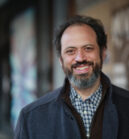

Guest appearances
Marc BenioffEvery podcast appearance, updated as new ones drop
Salesforce CEO, author of Trailblazer, stakeholder capitalism circuit
- Episodes
- 8
- Shows
- 8
- Hours
- ~9
Tracked from 15 Oct 2019 to 25 Feb 2026
Recent guest appearances
Show 8 episodes — hide
- Happy Nvidia Day, Salesforce Earnings with Marc Benioff, Anthropic's New Stance on Safety | Doug O'Laughlin, Maxwell Meyer, Ben Lerer, Michael Manapat, Adam Warmoth, Connor Sweeney, Matthew Harpe
Sign up for TBPN’s daily newsletter at TBPN.com (00:50) - How Fed is Thinking About AI Adoption (19:45) - Trump's Power Play on Big Tech (26:22) - 𝕏 Timeline Reactions (39:51) - Anthropic's New Stance on Safety (56:40) - 𝕏 Timeline Reactions (01:13:21) - Maxwell Meyer, a Stanford-educated geophysicist and former editor of the Stanford Review, is the founder and editor of Arena Magazine, a Texas-based, reader-supported technology publication launched in 2024. In the conversation, Meyer discusses Arena's latest issue, which explores themes of espionage and space, highlighting advancements in satellite technology and intelligence collection. He also shares insights into the magazine's editorial approach, emphasizing high-quality print content and a focus on pro-technology and pro-capitalism narratives. (01:33:48) - Ben Lerer, Managing Partner at Lerer Hippeau, discusses the transformative impact of artificial intelligence on the film industry, highlighting the emergence of AI-driven studios like Staircase Studios AI, which aim to produce high-quality films at significantly reduced costs. He emphasizes the necessity for Hollywood to adapt to these technological advancements to remain competitive, noting that while AI can streamline production processes, it cannot replace the human creativity essential to filmmaking. Lerer also touches on the evolving dynamics of talent in the industry, suggesting that actors who embrace AI technologies may benefit from increased efficiency and new opportunities, while those resistant to change risk being left behind. (02:01:55) - Doug O'Laughlin, president of SemiAnalysis, discusses the rapid adoption of AI technologies and their potential to cause widespread deflation by significantly reducing the cost of knowledge work. He expresses concern that this swift disruption could outpace societal and governmental responses, leading to economic instability. O'Laughlin also highlights the unprecedented speed at which AI can be deployed globally, contrasting it with historical technological advancements that required longer implementation periods. (02:29:10) - Marc Benioff, co-founder and CEO of Salesforce, is a pioneer in cloud computing and a noted philanthropist. In the conversation, he highlights Salesforce's unprecedented revenue guidance of $46.2 billion and a projected $16 billion in cash flow, attributing this growth to the integration of AI and agent technologies across their platforms. Benioff emphasizes the transformative role of AI agents in enhancing productivity and foresees a future where humans and AI agents collaborate seamlessly within enterprise software. (02:49:52) - Michael Manapat, co-founder of Rowspace, an AI platform for asset managers, discusses how their technology integrates with clients' internal systems to leverage proprietary data for faster decision-making. He emphasizes the increasing commoditization of public data due to AI advancements, highlighting the importance of utilizing decades of accumulated internal data and judgment. Manapat also notes that Rowspace operates within clients' environments to ensure data security and compliance, distinguishing their approach from other market offerings. (02:57:10) - Adam Warmoth, founder and CEO of Chariot Defense, discusses the company's recent $34 million Series A funding and its mission to provide advanced power solutions for modern military operations. He highlights the deployment of their systems across various Army and Marine Corps units, addressing critical power infrastructure needs for technologies like drones and next-generation command and control systems. Warmoth emphasizes leveraging commercial advancements in high-voltage batteries and power electronics to enhance defense platforms, ensuring reliable and efficient energy distribution on the battlefield. (03:05:04) - Connor Sw
- 20VC: Anthropic's $10BN Round | Klarna's IPO Broken Down | Inside a16z's 72 Deal Seed Investment Machine | Martin Casado: Is Consensus Investing the Only Game | Why Satya is Chatting S*** on SaaS Apps Disappearing featuring Marc Benioff
AGENDA: 00:00 – Marc Benioff vs Snowflake, Databricks & Palantir: Who Wins the Data Cloud War? 05:10 – Does Benioff Feel The Need to Buy AI Talent Like Zuck Is? 09:00 – What Salesforce has Learned From Palantir on Forward Deployed Engineers? 18:00 – Will SaaS apps disappear in an AI world? Why Satya is Chatting S*** 23:40 – Are SDRs really screwed by AI… or just evolving? 26:10 – Benioff on Who Wins: OpenAI or Anthropic? 30:00 – Nat Friedman reports to Alex Wang: Genius move or career downgrade? 34:00 – Anthropic’s $10B round: Have we hit peak AI hype? 47:00 – Klarna’s wild ride: From $45B to $6B to IPO at $15B 55:00 – Inside a16z’s seed machine: 72 bets vs Sequoia’s 27 57:45 – Martìn Casado: Is consensus investing dangerous—or the only game? 01:05:00 – The big lesson: consensus, contrarian, and why investing is harder than ever
- The Rise of the AI Economy and Digital Labor with Salesforce CEO Marc Benioff
We’re entering a new economic era, one driven not by human labor, but by AI. According to Salesforce CEO Marc Benioff, this shift isn’t just coming, it’s already here. In this episode of the Superhuman AI Podcast, Marc shares his vision of the emerging AI economy, how digital labor and AI agents are transforming business, and why this might be the most significant technological shift since the internet. This conversation explores how companies, creators, and individuals can adapt to and thrive in this new reality. Learn more about the Google for Startups Cloud Program here: https://cloud.google.com/startup/apply?utm_source=cloud_sfdc&utm_medium=et&utm_campaign=FY21-Q1-global-demandgen-website-cs-startup_program_mc&utm_content=superhuman_dec&utm_term=- We dive into: Why Marc sees AI as a new economic foundation The rise of digital labor and what it means for companies How Salesforce is integrating AI at every level Why this shift will impact every business and every job What the next 10 years of AI-driven transformation could look like If you're a founder, executive, operator, or builder this is the playbook for the AI-powered future. Subscribe for more deep conversations on AI, transformation, and what's next.
- AI and the Future of Enterprise: A SaaStr Deep Dive with Marc Benioff
"The Last Generation of Human-Only CEOs: Marc Benioff's Bold Vision for the AI-Augmented Enterprise" Marc Benioff was kind enough to join SaaStr for the first time to do a truly deep dive on what AI means in business software today. From how quickly humans will be replaced in some functions ... to how slow some traditional enterprises will be to change. It's a good one. Top 5 Unexpected Learnings: 1. Human + AI + Executive Teams Are The New Normal Marc Benioff revealed he's been working with AI agents for nearly three years, particularly when creating his V2MOM documents (Vision, Values, Methods, Obstacles, Measures). For these important strategic documents, he now has a three-party approach: himself, a Salesforce executive, and an AI agent working together. The AI asks critical questions about competitive positioning, distribution expansion, and ecosystem impact – often providing insights Benioff hadn't considered. This collaborative approach is delivering superior strategic thinking beyond what either humans or AI could produce independently. 2. The Last Generation of "Humans-Only" Leadership Benioff believes current leaders represent "the last generation of CEOs that only had human employees." This isn't just a catchphrase – Benioff actively works with AI agents daily to improve Salesforce and trains his employees to do the same. He sees the human+agent partnership as consciousness-expanding, providing deeper insights and a form of "enlightenment" for executives. The fundamental concept of agent-augmented executive teams is completely reshaping how decisions are made. 3. AI Budgets Are a Red Flag Where are AI budgets are coming from? Benioff shared a surprising perspective: having a separate "AI budget" might indicate you're heading in the wrong direction. He believes AI investments should come directly from line-of-business budgets, with business unit leaders held accountable for efficiency, productivity, and employee augmentation through AI. Organizations with isolated AI teams and budgets aren't properly integrating AI into core business operations. 4. The Four-Layer Enterprise Stack Benioff vision’s for the enterprise stack of the future: four integrated layers: 1) Apps (still critically important), 2) Data (more important than ever), 3) Agents (the AI layer), and 4) Robotics (the emerging physical manifestation layer). This four-layer vision is becoming the architectural blueprint for Salesforce's entire platform direction, with remarkable convergence in real-world implementation. 5. Agent-First Companies Will Dominate Benioff sees both an entirely new class of "agent-first" companies that will fundamentally differ from today's organizations. And existing leaders being radically remade that will look much different from how they do today. He expresses a hint of envy toward founders who are starting companies today because they can build agent-first organizations from the ground up rather than transforming existing ones. This suggests a profound competitive advantage for new entrants who design their entire business model around AI augmentation from day one. The Practical AI Transformation at Salesforce "Agents can only go so far without the data and apps. And this is where Salesforce wins with AI. The data is more important than ever. Or your agents just can't perform at the level of accuracy We need them to." The Real Impact of Salesforce's Agent Force AI Benioff is particularly excited about Agent Force, which began as a concept a year ago and is now deployed by about 5,000 companies. What's unique is how quickly customers are seeing value – far faster than traditional enterprise software implementation cycles. One standout example is Singapore Airlines, whose CEO is building an agentic layer over the entire airline. This
- Data + Love = Tableau Conference 23 PreGame with Marc Benioff, Ryan Aytay, and Will Perkins
Tableau Ambassador and pal Will Perkins drops by and brings Salesforce CEO Marc Benioff and newly-minted Tableau CEO Ryan Aytay with him! We talk AI, growth, community, and the future of the Tableau Conference. You won't want to miss it.
- Kara Swisher Interviews CEO of Salesforce Marc Benioff on Stage | 2023 Upfront Summit
Kara Swisher sits down with Salesforce CEO Marc Benioff for a 1:1 interview. They touch on Salesforce's recent earnings reporter, Marc's thoughts on employees returning to the office, and the future of generative AI. Recorded at the Upfront Summit on March 2, 2023.
- December 29, 2019: The next decade of news; one on one with Marc Benioff; how Trump has affected trust in media
Media winners and losers from the past decade; how to combat "truth decay;" and what to expect in media and tech in the next 10 years. David Zurawik, Nicole Carroll, Marc Benioff, Paul Huntsman, Jennifer Kavanagh, Oliver Darcy, and Amy Webb join Brian Stelter. To learn more about how CNN protects listener privacy, visit cnn.com/privacy Learn more about your ad choices. Visit podcastchoices.com/adchoices
- Marc Benioff interview — on values, S.F. and his trailblazing grandfather Marvin Lewis
Episode 99 is an interview with Salesforce co-founder and CEO Marc Benioff, who has a new book "Trailblazer," and writes about his foundational relationship with his grandfather, former San Francisco supervisor Marvin Lewis. Benioff talks with host Peter Hartlaub about the book (in bookstores Oct. 15), San Francisco and Lewis — a homeless advocate and monorail-loving politician who was a driving force behind BART. Hartlaub also shares some archive finds, including Benioff's father's "Candlestick Park coat," and the first Salesforce classified ad from 1999. (Spoiler: The fax number still works.) Produced by Peter Hartlaub. Music is "The Tide Will Rise" by the Sunset Shipwrecks off their album community. Learn more about your ad choices. Visit megaphone.fm/adchoices
Stay in the loop
Get Marc Benioff's next appearance by email
No app to install. We email you as soon as a new guest spot drops.
Prefer it in your podcast app? Add a private feed →
GuestVine has tracked 8 guest episodes from Marc Benioff across 8 shows — about 9 hours of listening, going back to October 2019. Every episode links straight to the original publisher's audio.
Recent stops include TBPN, The Twenty Minute VC (20VC): Venture Capital | Startup Funding | The Pitch and Superhuman AI: Decoding the Future. The conversations mostly sit in Business & Finance territory.
Most recent: “Happy Nvidia Day, Salesforce Earnings with Marc Benioff, Anthropic's New Stance on Safety | Doug O'Laughlin, Maxwell Meyer, Ben Lerer, Michael Manapat, Adam Warmoth, Connor Sweeney, Matthew Harpe” on TBPN, 25 Feb 2026.
Podcasts Marc Benioff has appeared on
The shows with the most detected Marc Benioff guest appearances.
- TBPNLatest appearance: 25 Feb 20261 episode
- The Twenty Minute VC (20VC): Venture Capital | Startup Funding | The PitchLatest appearance: 28 Aug 20251 episode
- Superhuman AI: Decoding the FutureLatest appearance: 8 May 20251 episode
- The Official SaaStr Podcast: SaaS | Founders | InvestorsLatest appearance: 3 May 20251 episode
- Data + LoveLatest appearance: 3 May 20231 episode
- Upfront VenturesLatest appearance: 8 Mar 20231 episode
- Reliable SourcesLatest appearance: 30 Dec 20191 episode
- Total SFLatest appearance: 15 Oct 20191 episode
Appearance timeline
How often Marc Benioff has guested over time — by quarter, from tracked appearances.
Marc Benioff has appeared on 8 recent podcast episodes across 8 different shows. GuestVine keeps this list complete and up to date — new appearances are added automatically and delivered to the podcast player you already use.
Frequently asked
- What podcasts has Marc Benioff been on?
- Marc Benioff has appeared on 8 recent podcast episodes across 8 shows, including TBPN, The Twenty Minute VC (20VC): Venture Capital | Startup Funding | The Pitch, Superhuman AI: Decoding the Future.
- What is Marc Benioff's latest podcast appearance?
- The latest detected appearance is “Happy Nvidia Day, Salesforce Earnings with Marc Benioff, Anthropic's New Stance on Safety | Doug O'Laughlin, Maxwell Meyer, Ben Lerer, Michael Manapat, Adam Warmoth, Connor Sweeney, Matthew Harpe” on TBPN, published 25 Feb 2026.
- How many hours of Marc Benioff podcast interviews are there?
- GuestVine has tracked about 9 hours of Marc Benioff guest appearances across 8 episodes, going back to 15 Oct 2019.
- How does GuestVine keep this list updated?
- GuestVine tracks delivered guest appearances, excludes own-show episodes where possible, and links back to the original publisher audio. New appearances are added automatically as they are detected.
Are you Marc? Add your live appearances to your site →
This page updates automatically every time Marc guests on a podcast. Link it from your site or bio so your audience always finds your latest appearances — and share it anywhere:
Paste this link into your site
<a href="https://guestvine.fm/p/marc-benioff">Marc Benioff — podcast appearances</a>