
Guest appearances
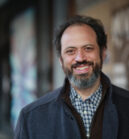
Virginia EubanksEvery podcast appearance, updated as new ones drop
political scientist, Automating Inequality author, digital rights and algorithmic bias circuit
- Episodes
- 16
- Shows
- 15
- Hours
- ~12
Tracked from 2 May 2018 to 1 Feb 2023
Recent guest appearances
Show 16 episodes — hide
- A Conversation with Virginia Eubanks
This episode features a conversation between Lane Rasberry, Wikimedia-in-Residence at the University of Virginia School of Data Science, and Virginia Eubanks, author, journalist, and associate professor of political science at the University at Albany. The conversation was recorded in 2019 but the topics are still relevant today. Eubanks looks toward the future, warning of the unintended—or at times intended—consequences of emerging technologies. The discussion focuses on the effects of algorithmic automation, as well as the practice, policies, and implementation of these algorithms. Although she critiques the tech world, Eubanks also provides many reasons for optimism. Virginia Eubanks authored the 2018 book Automating Inequality , which is a detailed investigation into data-based discrimination. She is also the author of Digital Dead End: Fighting for Social Justice in the Information Age and the co-editor, with Alethia Jones, of Ain’t Gonna Let Nobody Turn Me Around: Forty Years of Movement Building with Barbara Smith . She also writes for various outlets, including the Guardian, American Scientist, and the New York Times . Recently, Virginia began the PTSD Bookclub , an ongoing project that explores books about trauma and its aftermath. You can find this project and Virginia Eubank’s other projects at virginia-eubanks.com .
- Virginia Eubanks (Automating Care) - with Kelly McFall
Join us for an insightful interview with Virginia Eubanks, author of "Automating Inequality," as she discusses the impact of technology on social justice and the pitfalls of automated systems in the United States. Discover how these technologies affect marginalized communities and what can be done to address these issues.
- The Waves: Writer and Activist Virginia Eubanks on How to Live With Your Partner’s PTSD
On this week’s episode of The Waves, Slate senior editor Shannon Palus sits down with writer and political scientist Virginia Eubanks . They talk about Virginia’s New York Times magazine essay , “ His PTSD, and My Struggle to Live With It ,” and how the condition is more widespread than most people realize, even as terms like “trauma” and “triggered” are tossed around cavalierly. Later in the show, they talk about why you shouldn’t give unsolicited advice to people living with PTSD—and what kind of support caregivers of people with PTSD really need. In Slate Plus: Why Virginia wanted to write her New York Times essay, and whether the COVID-19 pandemic is, technically speaking, a traumatic event. Further Recommended Reading: What to Say When Someone Tells You They’re Chronically Ill by Rachel Meeks Irritable Hearts: A PTSD Love Story by Gabriel Mac Podcast production by Cheyna Roth with editorial oversight by Shannon Palus, Daisy Rosario and Alicia Montgomery. Send your comments and recommendations on what to cover to thewaves@slate.com Learn more about your ad choices. Visit megaphone.fm/adchoices
- How to Live With Your Partner’s PTSD
On this week’s episode of The Waves, Slate senior editor Shannon Palus sits down with writer and political scientist Virginia Eubanks . They talk about Virginia’s New York Times magazine essay , “ His PTSD, and My Struggle to Live With It ,” and how the condition is more widespread than most people realize, even as terms like “trauma” and “triggered” are tossed around cavalierly. Later in the show, they talk about why you shouldn’t give unsolicited advice to people living with PTSD—and what kind of support caregivers of people with PTSD really need. In Slate Plus: Why Virginia wanted to write her New York Times essay, and whether the COVID-19 pandemic is, technically speaking, a traumatic event. Further Recommended Reading: What to Say When Someone Tells You They’re Chronically Ill by Rachel Meeks Irritable Hearts: A PTSD Love Story by Gabriel Mac Podcast production by Cheyna Roth with editorial oversight by Shannon Palus, Daisy Rosario and Alicia Montgomery. Send your comments and recommendations on what to cover to thewaves@slate.com Learn more about your ad choices. Visit megaphone.fm/adchoices
- #17 Shifting Forward #2
How do you see your work and the world in 10 years? This is part 2 with Joanna Bryson, Virginia Eubanks, Hessie Jones, Morgan Klaus, Osamu Saito, Rupal Srivastava, Gabriela de Queiroz e Buse Çetin.
- #15 Automating Inequality and Trauma with Virginia Eubanks.
Systems used by the government to automate social services may create injustice. Virginia talked to Kunumi about the impact of these systems on people's lives. She also focuses her work on trauma: social, physical, and mental.
- Automating Inequality author Virginia Eubanks talks inequality in tech
On this week's episode of the show, I chat with Virginia Eubanks about how high-tech tools and software profile and punish people of color and low-income people and families. The post Episode #181: Virginia Eubanks appeared first on PolicyViz .
- Take 5 with Virginia Eubanks
Jepson student Ben Weinstein, ’20, interviews 2019-20 Jepson Leadership Forum speaker Virginia Eubanks prior to her presentation, "Algorithms, Austerity, and Inequality." February 13, 2020
- Virginia Eubanks, "Automating Inequality: How High-Tech Tools Profile, Police, and Punish the Poor" (St. Martin's, 2018)
The State of Indiana denies one million applications for healthcare, foodstamps and cash benefits in three years―because a new computer system interprets any mistake as “failure to cooperate.” In Los Angeles, an algorithm calculates the comparative vulnerability of tens of thousands of homeless people in order to prioritize them for an inadequate pool of housing resources. In Pittsburgh, a child welfare agency uses a statistical model to try to predict which children might be future victims of abuse or neglect. Since the dawn of the digital age, decision-making in finance, employment, politics, health and human services has undergone revolutionary change. Today, automated systems―rather than humans―control which neighborhoods get policed, which families attain needed resources, and who is investigated for fraud. While we all live under this new regime of data, the most invasive and punitive systems are aimed at the poor. In Automating Inequality: How High-Tech Tools Profile, Police, and Punish the Poor (St. Martin's, 2018) , Virginia Eubanks systematically investigates the impacts of data mining, policy algorithms, and predictive risk models on poor and working-class people in America. The book is full of heart-wrenching and eye-opening stories, from a woman in Indiana whose benefits are literally cut off as she lays dying to a family in Pennsylvania in daily fear of losing their daughter because they fit a certain statistical profile. The U.S. has always used its most cutting-edge science and technology to contain, investigate, discipline and punish the destitute. Like the county poorhouse and scientific charity before them, digital tracking and automated decision-making hide poverty from the middle-class public and give the nation the ethical distance it needs to make inhumane choices: which families get food and which starve, who has housing and who remains homeless, and which families are broken up by the state. In the process, they weaken democracy and betray our most cherished national values. This deeply researched and passionate book could not be more timely. John Danaher is a lecturer the National University of Ireland, Galway. He is also the host of the wonderful podcast Philosophical Disquisitions . You can find it here on Apple Podcasts. Learn more about your ad choices. Visit megaphone.fm/adchoices Support our show by becoming a premium member! https://newbooksnetwork.supportingcast.fm/technology
- Virginia Eubanks, "Automating Inequality: How High-Tech Tools Profile, Police, and Punish the Poor" (St. Martin's, 2018)
The State of Indiana denies one million applications for healthcare, foodstamps and cash benefits in three years―because a new computer system interprets any mistake as “failure to cooperate.” In Los Angeles, an algorithm calculates the comparative vulnerability of tens of thousands of homeless people in order to prioritize them for an inadequate pool of housing resources. In Pittsburgh, a child welfare agency uses a statistical model to try to predict which children might be future victims of abuse or neglect. Since the dawn of the digital age, decision-making in finance, employment, politics, health and human services has undergone revolutionary change. Today, automated systems―rather than humans―control which neighborhoods get policed, which families attain needed resources, and who is investigated for fraud. While we all live under this new regime of data, the most invasive and punitive systems are aimed at the poor. In Automating Inequality: How High-Tech Tools Profile, Police, and Punish the Poor (St. Martin's, 2018) , Virginia Eubanks systematically investigates the impacts of data mining, policy algorithms, and predictive risk models on poor and working-class people in America. The book is full of heart-wrenching and eye-opening stories, from a woman in Indiana whose benefits are literally cut off as she lays dying to a family in Pennsylvania in daily fear of losing their daughter because they fit a certain statistical profile. The U.S. has always used its most cutting-edge science and technology to contain, investigate, discipline and punish the destitute. Like the county poorhouse and scientific charity before them, digital tracking and automated decision-making hide poverty from the middle-class public and give the nation the ethical distance it needs to make inhumane choices: which families get food and which starve, who has housing and who remains homeless, and which families are broken up by the state. In the process, they weaken democracy and betray our most cherished national values. This deeply researched and passionate book could not be more timely. John Danaher is a lecturer the National University of Ireland, Galway. He is also the host of the wonderful podcast Philosophical Disquisitions . You can find it here on Apple Podcasts. Learn more about your ad choices. Visit megaphone.fm/adchoices
- Automating Inequality, with Virginia Eubanks
Virginia Eubanks is an associate professor of political science at UAlbany's Rockefeller College of Public Affairs & Policy. On this episode of the UAlbany News Podcast, Eubanks shares about her book, 'Automating Inequality: How High-Tech Tools Profile, Police and Punish the Poor.' In the book, she details three examples of technology failing to streamline welfare programs: • an effort to automate eligibility processes for public assistance programs in Indiana •an electronic registry of the homeless in California •a statistical model in Pennsylvania that attempts to predict child maltreatment These automated public service systems are designed to serve some of the country’s most vulnerable populations, such as those living in poverty or contending with poor health, while at the same time saving the government time and money. But these technologies can leave poor families feeling tracked, targeted and trapped. Eubanks explains how these systems fail to remove human bias, exacerbate inequality and perpetuate a "Digital Poorhouse" for working-class people in America. The UAlbany News Podcast is hosted and produced by Sarah O'Carroll, a Communications Specialist at the University at Albany, State University of New York, with production assistance by Patrick Dodson and Scott Freedman. Have a comment or question about one of our episodes? You can email us at mediarelations@albany.edu, and you can find us on Twitter @UAlbanyNews.
- Virginia Eubanks
“The Poor People’s Human Economic Rights Campaign…the way they define poverty is: if at any point you have lacked access to one of your basic economic human rights.” Virginia Eubanks is an Associate Professor of Political Science at the University at Albany, SUNY. She is the author of Automating Inequality: How High-Tech Tools Profile, Police, and Punish […]
- Economic Alternatives to Extractive Capitalism: Nathan Schneider and Virginia Eubanks
Holiday Rewind: Since the 2008 financial crash, one thing we've learned is that there exist in the US not just one economy, but many, as well as many kinds of economic actors. From platform cooperatives to cryptocurrency, people are building economic alternatives to climate devastation and capitalist extraction. So says Nathan Schneider , crusader for the internet of ownership and author of Everything for Everyone: the Radical Tradition That Is Shaping The Next Economy. Plus, Virginia Eubanks on how government and corporations are erasing social services through unequal digital practices. Music: “You Are the One the World Becomes” by Morley, from her new album ‘1000 Miles’. Support theLFShow, 10 Years of Making Power Through Media! Laura Flanders and Friends Crew: Laura Flanders-Executive Producer, Writer; Sabrina Artel-Supervising Producer; Jeremiah Cothren-Senior Producer; Veronica Delgado-Video Editor, Janet Hernandez-Communications Director; Jeannie Hopper-Audio Director, Podcast & Radio Producer, Audio Editor, Sound Design, Narrator; Sarah Miller-Development Director, Nat Needham-Editor, Graphic Design emeritus; David Neuman-Senior Video Editor, and Rory O’Conner-Senior Consulting Producer. FOLLOW Laura Flanders and Friends Instagram: https://www.instagram.com/lauraflandersandfriends/ Blueky: https://bsky.app/profile/lfandfriends.bsky.social Facebook: https://www.facebook.com/LauraFlandersAndFriends/ Tiktok: https://www.tiktok.com/@lauraflandersandfriends YouTube: https://www.youtube.com/channel/UCFLRxVeYcB1H7DbuYZQG-lg Linkedin: https://www.linkedin.com/company/lauraflandersandfriends Patreon: https://www.patreon.com/lauraflandersandfriends ACCESSIBILITY - The broadcast edition of this episode is available with closed captioned by clicking here for our YouTube Channel
- #5 Bonus Full Interview in English (Virginia Eubanks)
Ergänzung zu Folge 5: Dort gibt es einen Teil über und mit Virginia Eubanks. Er beruht auf viel Lektüre und diesem Recherche-Interview mit Virginia auf Englisch. Darin spricht sie ausführlich über ihr Buch "Automating Inequality - How High Tech Tools Profile, Police, and Punish the Poor".
- Why One Professor Says We Are ‘Automating Inequality’
Often the algorithms that shape our lives feel invisible, but every now and then you really notice them. Your credit card might get declined when you’re on vacation because a system decides the behavior seems suspicious. You might buy a quirky gift for your cousin, and then have ads for that product pop up everywhere you go online. In education, schools and colleges even use big data to nudge students to stay on track. As we create this data layer around us, there’s more and more chance for systems to misfire, or to be set up in a way that consistently disadvantages one group over another. That potential for systemic unfairness is the concern of this week’s podcast guest, Virginia Eubanks. She’s an associate professor of political science at SUNY Albany and a longtime advocate for underprivileged communities as well as an expert on tech. She’s the author of Automating Inequality: How High-Tech Tools Profile, Police, and Punish the Poor, which The New York Times called “riveting” and noted that that’s an unusual accomplishment for a book about policy and tech. EdSurge connected with Eubanks this month to ask her about her explorations of technology’s unintended consequences, and about what people in education should consider as they leverage big data systems.
- Virginia Eubanks | Automating Inequality: How High-Tech Tools Profile, Police, and Punish the Poor
Virginia Eubanks, Associate Professor of Political Science at the University at Albany, SUNY, discusses her new book. Since the dawn of the digital age, decision-making in finance, employment, politics, health and human services has undergone revolutionary change. Today, automated systems—rather than humans—control which neighborhoods get policed, which families attain needed resources, and who is investigated for fraud. While we all live under this new regime of data, the most invasive and punitive systems are aimed at the poor. Automating Inequality systematically investigates the impacts of data mining, policy algorithms, and predictive risk models on poor and working-class people in America. The book is full of heart-wrenching and eye-opening stories, from a woman in Indiana whose benefits are literally cut off as she lays dying to a family in Pennsylvania in daily fear of losing their daughter because they fit a certain statistical profile.
Stay in the loop
Get Virginia Eubanks's next appearance by email
No app to install. We email you as soon as a new guest spot drops.
Prefer it in your podcast app? Add a private feed →
GuestVine has tracked 16 guest episodes from Virginia Eubanks across 15 shows — about 12 hours of listening, going back to May 2018. Every episode links straight to the original publisher's audio.
Virginia Eubanks shows up most often on Volume Podcast (2 episodes), with visits to UVA Data Points and The Newman Bond. The conversations mostly sit in Science and Culture & Arts territory.
Most recent: “A Conversation with Virginia Eubanks” on UVA Data Points, 1 Feb 2023.
Podcasts Virginia Eubanks has appeared on
The shows with the most detected Virginia Eubanks guest appearances.
- Volume PodcastLatest appearance: 1 Jul 20212 episodes
- UVA Data PointsLatest appearance: 1 Feb 20231 episode
- The Newman BondLatest appearance: 17 Jan 20231 episode
- Slate ConversationsLatest appearance: 15 Sept 20221 episode
- The Waves: Gender, Relationships, FeminismLatest appearance: 15 Sept 20221 episode
- The PolicyViz PodcastLatest appearance: 6 Oct 20201 episode
- Jepson School of Leadership StudiesLatest appearance: 18 Mar 20201 episode
- New Books in Policing, Incarceration, and ReformLatest appearance: 20 Feb 20201 episode
Appearance timeline
How often Virginia Eubanks has guested over time — by quarter, from tracked appearances.
Virginia Eubanks has appeared on 16 recent podcast episodes across 15 different shows. GuestVine keeps this list complete and up to date — new appearances are added automatically and delivered to the podcast player you already use.
Frequently asked
- What podcasts has Virginia Eubanks been on?
- Virginia Eubanks has appeared on 16 recent podcast episodes across 15 shows, including Volume Podcast, UVA Data Points, The Newman Bond.
- What is Virginia Eubanks's latest podcast appearance?
- The latest detected appearance is “A Conversation with Virginia Eubanks” on UVA Data Points, published 1 Feb 2023.
- How many hours of Virginia Eubanks podcast interviews are there?
- GuestVine has tracked about 12 hours of Virginia Eubanks guest appearances across 16 episodes, going back to 2 May 2018.
- How does GuestVine keep this list updated?
- GuestVine tracks delivered guest appearances, excludes own-show episodes where possible, and links back to the original publisher audio. New appearances are added automatically as they are detected.
Are you Virginia? Add your live appearances to your site →
This page updates automatically every time Virginia guests on a podcast. Link it from your site or bio so your audience always finds your latest appearances — and share it anywhere:
Paste this link into your site
<a href="https://guestvine.fm/p/virginia-eubanks">Virginia Eubanks — podcast appearances</a>